The annual plant sale was huge this year, and they still had plenty of plants - the volunteers were on their game today and removed plant signs as soon as they were gone so I didn't really even notice if they were out of varieties. Of course, I also tend not to plan when I go to the sale (except for how many plants I'm going to get).
This year, I pre-determined that I should only get 3 or 4 plants since I grew peppers, basil, and tomatoes from seed. Roberta also stuck to her guns and only got 6 tomatoes. Of course, having it be cold and rainy may have helped with this. The tomatoes I got this year were all recommended tomatoes in the book, Epic Tomatoes.
Purchased:
Black from Tula - Heirloom - Deep, reddish-brown Russian beefsteak. Smooth skin,
fairly heat-tolerant, can be a good producer. Delicious
slightly sweet fruit, 8-12oz. Indeterminate. 78 days.
Coyote - Cherry - A yellow jewel-like cherry, that bears 6 to 8 on a
branch. Very flavorful. Indeterminate. 75 days.
Nepal - Heirloom - 10-12 oz., medium-large, globe-shaped, bright red fruits
are rather soft but meaty with excellent flavor. Plenty of
old-fashioned tomato flavor. Indeterminate. 78 days.
Rosella Purple - Container - Dwarf, good for containers. Similar to Cherokee Purple
for great flavor and 6-10 oz. deep-purple fruits.
Determinate. 65 days.
Grown:
Black Krim - Heirloom - Flattened 4-5" globes with dark greenish-black shoulders.
Likes hot weather. Rich complex flavor, sweet-tasting fruit.
Indeterminate. 75 – 90 days.
Cayenne - 75 days. Concentrated set of wrinkled, very pungent
fruit, 6X1/4 inches. For sauces and drying.
Pasilla Bajio - 75-80 days. Good yields of 8-10 inch long fruit that
are mildly hot and turn from green to dark brown when
mature. Used to make smoky flavored sauces.
Showing posts with label Books. Show all posts
Showing posts with label Books. Show all posts
Saturday, March 4, 2017

Thursday, April 17, 2014
On why I'm so slow.
Sorry for the lateness of all of the upcoming posts. So far behind...so very far behind. Though, to be fair, it's not like I didn't have some very good excuses.
The first Saturday of April I took Strider, one of the Dogs Out Loud dogs available for adoption, to McKinney Falls where the bluebonnets were just AMAZING. Also saw some wild clematis (which was kinda cool... and it made me want some, so now I gotta find a place for that).
In the end we hiked about 4 miles since I originally planned to hike the "homestead loop" but then decided I didn't want to cross the river when it looked like it was going to be raining, so instead we walked over to the Onion Creek Hike and Bike trail. I think Strider was kinda glad when it was all done - but the point is that he did the whole thing and seemed pretty okay with it (which is good considering that I'd like to take him on a 5k run in a few weeks).
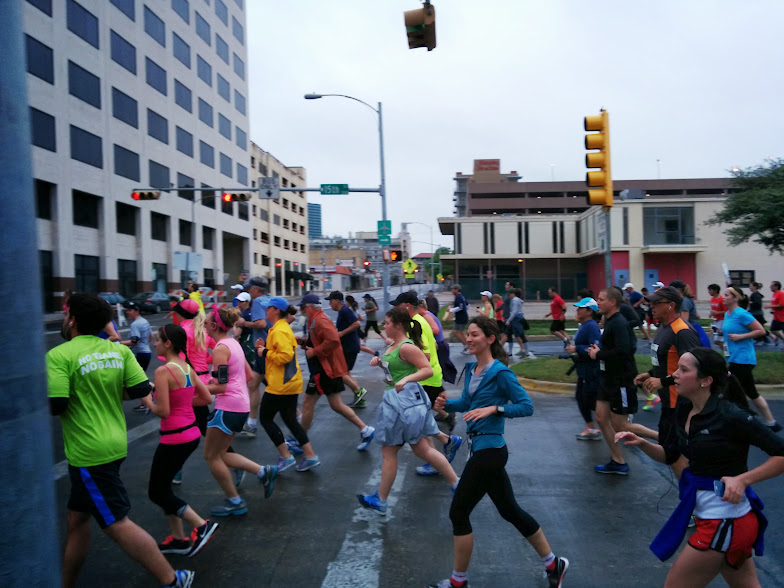
Then on Sunday I ran the Cap10k. It was my first time doing the race, and the first time I'd ever done 10k. Since I ran all over the course while Shawn was doing his XTERRA race the other week taking photos, he ran all over the course of the 10k taking photos of me. GREAT.
The following weekend I spent Saturday morning reading a book and cleaning all of my bird stuff (and contemplating getting a feeder specifically for the woodpeckers, and upgrading my hummingbird feeder to something easier to clean). THEN I went to the East Austin Garden Fair. Where I didn't take any photos, which I'm sure all the Master Gardeners are happy about. But I did get to spend a few hours talking with Vicki, Meredith, Sheryl, Caroline and Daphne. I missed Ally, though she had to have been there because she always works the chicken table, though maybe she was at home with her new puppies. After the EAGF, I picked the husband up on our way to visit his parents for a pre-Easter get together.
Sunday, I spent most of the day doing Floodplain Outreach at the Colorado River Alliance Family Festival. Afterwards, I decided to reward myself with a trip to BookPeople (mostly I was looking for a book titled "Bones would Rain from the Sky," which I didn't find, so instead I got a book of Hans Christian Andersen Fairy Tales and a true crime book about a serial killer in Paris in the 1940s. Eclectic tastes, I have them.)
So... all this to say that I'm going to be writing a (very, very) late post for April Wide Angles, and a (very) late post for bloom day/foliage followup. And of course the upcoming weekends aren't looking to be any less hectic - Pints for Pups and Change for Change are this Saturday in case you're looking for something to do. I'm going to try to go to both (especially since my favorite pup is going to be at Change for Change).
The first Saturday of April I took Strider, one of the Dogs Out Loud dogs available for adoption, to McKinney Falls where the bluebonnets were just AMAZING. Also saw some wild clematis (which was kinda cool... and it made me want some, so now I gotta find a place for that).
 |
| Strider. He is the dog I'd get if my husband would let me have a dog. You can read more about him at the Dogs Out Loud page here: http://www.dogsoutloud.org/adoptables/strider/ |
 |
| Who's a good dog?! Strider is! |
Then on Sunday I ran the Cap10k. It was my first time doing the race, and the first time I'd ever done 10k. Since I ran all over the course while Shawn was doing his XTERRA race the other week taking photos, he ran all over the course of the 10k taking photos of me. GREAT.
The following weekend I spent Saturday morning reading a book and cleaning all of my bird stuff (and contemplating getting a feeder specifically for the woodpeckers, and upgrading my hummingbird feeder to something easier to clean). THEN I went to the East Austin Garden Fair. Where I didn't take any photos, which I'm sure all the Master Gardeners are happy about. But I did get to spend a few hours talking with Vicki, Meredith, Sheryl, Caroline and Daphne. I missed Ally, though she had to have been there because she always works the chicken table, though maybe she was at home with her new puppies. After the EAGF, I picked the husband up on our way to visit his parents for a pre-Easter get together.
Sunday, I spent most of the day doing Floodplain Outreach at the Colorado River Alliance Family Festival. Afterwards, I decided to reward myself with a trip to BookPeople (mostly I was looking for a book titled "Bones would Rain from the Sky," which I didn't find, so instead I got a book of Hans Christian Andersen Fairy Tales and a true crime book about a serial killer in Paris in the 1940s. Eclectic tastes, I have them.)
Saturday, March 9, 2013
Book Review: Mrs. Greenthumbs Plows Ahead

This is the second Mrs Greenthumbs book I've read. Both of them were gifted to me by my friend Bond before she moved to LA. I've gotta start out by saying that I really liked this book. The last Mrs. Greenthumbs book I read, I wasn't too fond of - mostly because I didn't like how it was organized - a garden guide by month for a northeast garden (not necessarily applicable to central Texas). Oh sure, it was funny, and I did like the humor (that's the reason why I bothered reading this book).
I thought this book translates well to all parts of the country - mostly because she continues to state that you should use plants that do well in your area, and that what grows well in her garden isn't going to grow well in Santa Fe. The book is split up into 5 sections/recommendations - Create the garden as a separate place away from the world, Plant perennials and plant them abundantly, Use plants that grow easily in your climate and location, Have something in bloom throughout the gardening season, Don't plant magenta next to taxicab yellow. Within each section, it is split into many more "how to/recommendation" sections.
There are many tidbits that I'll end up using, or at least keeping in mind - for example: For easy proportioning, use 2:1+1. That is, if your house is 20' tall, there should be plants about 11' tall, with the plants immediately next to those being about 6.5' tall. This also works in sizing beds - you have a 6' fence, which means that you have a 4' garden bed in front of it. I'll also probably start paying attention to the color wheel (admittedly, this is probably a one-two punch between the Master Gardeners' seminar on roses and the book as I went to the seminar and then read the part in the book about paying attention to color (see previous post about plopper vs. planner and I think you'll understand). Since I believe that if something happens multiple times, it's the universe trying to tell me something, I'll pay heed.
Anyway, this is a book that the original plan was to read it and then continue to pass it on to my coworkers, and yet I know I won't do that...which means that i really recommend this book.
Friday, February 22, 2013
Garden Design Implementation: Phases 7 and 8 of eleventy-billion

Phase 7: I don't know if it was the impending dinner party, the brush pick up, or the fact that he squashed my dreams of a cinder block wall, but while I was at Pam's Lawn Gone talk at the Natural Gardener, the husband set up my secondary rain barrel. This rain barrel has been sitting in the yard not set up and not collecting water since my friends gave it to me when they moved in April. As you can see, he used the cinder blocks as a stand since more head equals better draining of water from the barrel.
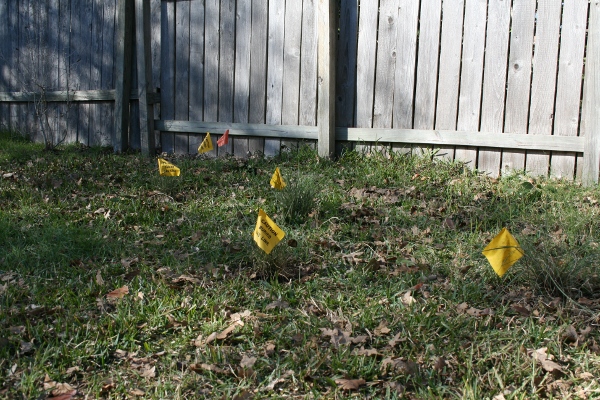
Phase 8: The planting of the grasses. My original Plan called for two Big Muhly grasses, and when the husband nixed the cinder block wall, I added a third. Since I decided that wouldn't give enough screening, I decided to add three Gulf Coast Muhlies to the mix as well. Of course I don't think this will be tall enough to totally shield the utility box, but it's a start. Of course you can't see green on green grasses, so I'll help you out - the yellow flags are the grasses and the one lone orange flag in the back is a coral honeysuckle vine. The flags, naturally, are meant to keep the husband from accidentally mowing over them. I purchased one of the big muhly grasses back during the fall Wildflower Center sale, I got one from my coworker, and I purchased the third at Barton Springs Nursery the day of the talk (yes, I totally visited two of our awesome locally owned nurseries on Saturday). I got the two gulf muhlies at the Natural Gardener. The coral honeysuckle also came from BSN. Not shown: The Augusta Duelberg sage and 2 Ruby Crystals grasses I also got at BSN.
All that's left on this side of the yard is to plant the Hamelia Patens aka Firebush next to the rain barrel (I use the scientific name because the plant is sometimes called hummingbird bush, but there are a bunch of other plants also called hummingbird bush). I may also replant more petunia as my current plan calls for having it moved all to this side of the yard (but I may wait until the fall to move the rest).
Sunday, February 17, 2013
Book Review: Wicked Plants by Amy Stewart

I had never read an Amy Stewart book before, so I'm not sure if the layout is the same - she has 2-4 page synopses of each type of plant outlining why the plant is bad and what it does. Having these short chapters makes for easy refreshers later. For example, one of my coworkers mentioned a beverage that his brother brought back for him from the Netherlands; the beverage included some buffalo grass in the bottle. I remembered that this book had something about a Polish drink that included buffalo grass so I found that particular entry, flagged it, and let my coworker read it.
On the plus side, the 'chapters' are extremely short, so for those that can't read much, should find this book no problem to read in snippets. It's also a good book to have on hand if you have any plants that are listed - at least you'll know wha tot look for if someone eats the plant.
Sunday, February 10, 2013
Book Review: The $64 Tomato

I've had this book in my "to read" list for quite some time and my sister bought if for me as a Christmas gift this year (probably because she, like my mom, is tired of seeing the same things on my Christmas List year after year).
The book was pretty much what I expected it to be - a story of a man and how gardening both made him sane and crazy (helps him de-stress, but he's also out at the college collecting apple tree pollen so he can pollinate some early blooming apple trees). Because that's what gardening's all about, right? I don't think I found it quite as funny as some of the "I almost went crazy" books I've read in the past (for the record, I absolutely loved "Enslaved by Ducks"). But I did enjoy the book. I finished it about a month ago or so and I already know that I will end up re-reading it again which says something about a book - if I want to read it again, it was a good book. Yes, yes, I'm one of those weirdos that re-reads books over and over and over if I like them. Drives my husband nuts. I'm not sure why, though, you'd figure that since he doesn't like spending money, he'd love that I re-read the same books over and over.
If you want to read this book, be forewarned that it is written by a man who lives in the Northeast so it isn't necessarily going to be prescient to those of us who live in Texas - growing tomatoes in the middle of summer? having 3 uninterrupted months to plan what you want to put in the garden? That's just crazy talk. I did also take issue with how he calculated the cost of his Brandywine tomatoes at the end of the book - I have no issue with amortizing the cost of start up throughout all the years (in fact you should take that into account), but I do take issue with assuming that all of his other crops for the year would only be worth what he would pay at the farm stand instead of splitting the overrun over all of the crops - it's the difference between saying "I spent $100 dollars on ten of the things" vs. "I spent $50 on nine of the things and $50 on this one thing." He also doesn't count his time spent in the garden in the cost - of course, I'm not sure that I would either because I like to garden and I do it because I like it, not because I'm getting crops from it.
So, would I recommend the book? Yes and no. If you don't do veggie gardening, you probably won't care for it; but if you do do veggie gardens, you may appreciate it.
Wednesday, March 14, 2012
Book Review: Founding Gardeners
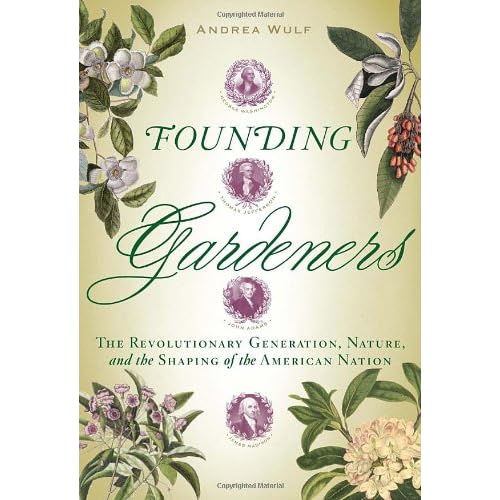
The book never was dry (some can be - the book '1776' comes to mind), though I'm sure to some, it may be. My biggest problem with the book was the amount of information that is jam packed into it - footnotes, the bibliography (which makes up almost half of the book), and an appendix. It seems to me that these 4 gentlemen (along with select others that were not in the politics game), were the original garden bloggers - there were tours of gardens, there were letters, plants and seeds exchanged, there was even research on best practices for crop rotation and manures. Jefferson and Adams took a tour of English gardens while Adams was serving as ambassador (makes me wonder if Jenny at RockRose saw any of the same gardens when she did her England Garden tour a few years back), and this is where they first became friends (they had a falling out years later over politics, they eventually, in their retirement, became friends again - all because of gardening). Washington insisted on using American plants at Mount Vernon and wanted his plantation to be something wholly American. Madison was considered what today would be a conservationist and called for people to step lightly on the land lest it be entirely destroyed in the rush to grow wheat and tobacco. Jefferson was more excited about the Louisiana Purchase and the plants that would be found than he was about the land itself. And Adams never felt more at peace than he did when he was in his orchards in Quincy, Massachusetts.
As I said, I loved it and I highly recommend the book - good reads, good reads...
Sunday, January 29, 2012
Book Review: The Informed Gardener
I don't quite remember why I put "The Informed Gardener" on my Christmas wishlist - I just remember that I asked for it a few years ago and since I tend not to remove things from my wishlist until I get them, my mom finally decided she was sick and tired of seeing it on my list so she got me the book for Christmas.
 Linda Chalker-Scott is a horticulturist who, in 2000, started writing newsletter-type articles for use by landscape professionals in Washington State. Within a few years, more people had started reading the articles and requested they be made available in book form. This book is the requested anthology.
The book has some great information and all the chapters are quick reads without getting too into the science nitty-gritty (though all of the scientific papers used in research are listed at the end of each chapter). The articles are separated into subsets (e.g. Understanding How Plants Work, Miracle in a Bag/Bottle/Box) and all start out with "The myth of XXX" where XXX is anything from "Fragile Roots" to "Organic Superiority." The super nice thing about the articles is that they provide, in bullet-list form, a summary of what the article was about for quick reference. Without that bullet list the book would become much more of a "well, that was a nice read" book where you may remember to get it out every once in a while when you had a question, but would then spend time reading multiple articles looking for the one you were thinking of. With the bullet list, the book becomes much more of a reference you can access whenever you want because while you may have to read a few lists, it isn't going to be the same amount of time lost as if you had to re-read each article.
My only complaints about the book are that 1) it's in book form which means that unless the book is updated every so often, it's quite possible that some of things that are mentioned in the book may end up being false or slightly modified in the future when more research has been done (and it likely wouldn't be one of the Myths, but instead one of the factoid points within the article itself). And 2) As with most books, it's more applicable to the Pacific Northwest (I know, I know - if you want a book for Central Texas, you get a book for Central Texas). In the book, multiple times, she mentions using wood chips over any other type of mulch because the plants do best with that. However, those of us in the Austin area also know that using wood chips usually means having a larger amount of cockroaches. Something, which I'm sure is uncommon in the Northwest. Of course, it could be that what she means by "wood chips" and what I think when I hear "wood chips" may be completely different things. Another article is about using pruning sealer on trees (as in, 'don't'). But again, down here we know that if we prune our oak trees during certain times of the year (i.e. Feb 1 - June 30), we really should use something to prevent oak wilt. Of course, her article mentions the fact that if you live in an area with oak wilt, you may need to use "a fungicide or insecticide", but it's at the end when, for national publication, it seems like it might have been better to put a disclaimer at the beginning of the article (I honestly almost skipped the article since it's called "The myth of wound dressings")
But, overall, it's a very good book and I highly recommend it to the home landscaper.
Wednesday, January 11, 2012
Book Review: How Carrots Won the Trojan War
When looking for a Christmas present for me, my sister went to the local bookstore, plopped herself down in the 'gardening' section and didn't leave until she found a bajillionty books for me. One of those books was "How Carrots Won the Trojan War" by Rebecca Rupp.

I started reading the book right after Christmas and finished it last weekend, so it did go pretty quickly. The chapters are separated by fruit or vegetable (so chapter 1: Asparagus, chapter 6: Celery, etc.) and each is chock full of history, science, trivia and stories of the specified food item. The only complaint I had was that each chapter is so full of information that it is best read in small snippets instead of just sitting down and reading chapter after chapter. I feel the same way about Cooking for Geeks if anyone has read that book.
Each chapter starts with a quote about the food item ("A cucumber should be well sliced, and dressed with pepper and vinegar, and then thrown out, as good for nothing." -Samuel Johnson) and usually gives a few stories of the food item (the Greeks ate carrots while in the Trojan Horse so they wouldn't have to go #2 while waiting) before going into the nutritional make-up. There, of course, are always bits and snippets of information included in each chapter as well (Moslem legend states that as Satan departed the Garden of Eden, onions sprang from his right footprints and garlic from his left); and of course there are some snippets that are more useful to our everyday gardening such as "melons and cucumbers...both belong to the genus Cucumis, but are separate species...and so do not interbreed. An exception is the sinuous Armenian cucumber (C. melo var. flexuosus)...which will cross with the melon because, despite its cucumberish name and appearance, it actually is a melon."
Subscribe to:
Posts (Atom)